Hypothesis Testing


Lecture 16

April 10, 2024

Class Overview

What We’ve Done

  • Develop probability models consistent with data-generating processes;
  • Simulate from probability models (Monte Carlo)
  • Calibrate (fit) models to data and quantify uncertainties (bootstrap, MCMC).

What’s Left?

  • Assessing evidence/model selection
  • Maybe: Emulation and surrogate modeling

Hypothesis Testing

What Is Hypothesis Testing?

  • Is a time series stationary?
  • Does some environmental condition have an effect on water quality/etc?
  • Does a drug or treatment have some effect?

Example: Storm Surge Nonstationarity

Standard Extreme Value Models (GEV/GPD): No long-term trend in the data (extremes follow the same distribution)

This is an example of a null hypothesis: no meaningful effect.

Example: Storm Surge Nonstationarity

Alternative Hypothesis: There is a long-term trend in the data.

How can we draw conclusions about whether apparent trends are “real” (alternative hypothesis) or noise (null hypothesis)?

Hypothesis Testing Notation

  • \(\mathcal{H}_0\): null
  • \(\mathcal{H}\): alternative

San Francisco Tide Gauge Data

Code
# load SF tide gauge data
# read in data and get annual maxima
function load_data(fname)
    date_format = DateFormat("yyyy-mm-dd HH:MM:SS")
    # This uses the DataFramesMeta.jl package, which makes it easy to string together commands to load and process data
    df = @chain fname begin
        CSV.read(DataFrame; header=false)
        rename("Column1" => "year", "Column2" => "month", "Column3" => "day", "Column4" => "hour", "Column5" => "gauge")
        # need to reformat the decimal date in the data file
        @transform :datetime = DateTime.(:year, :month, :day, :hour)
        # replace -99999 with missing
        @transform :gauge = ifelse.(abs.(:gauge) .>= 9999, missing, :gauge)
        select(:datetime, :gauge)
    end
    return df
end

dat = load_data("data/surge/h551.csv")

# detrend the data to remove the effects of sea-level rise and seasonal dynamics
ma_length = 366
ma_offset = Int(floor(ma_length/2))
moving_average(series,n) = [mean(@view series[i-n:i+n]) for i in n+1:length(series)-n]
dat_ma = DataFrame(datetime=dat.datetime[ma_offset+1:end-ma_offset], residual=dat.gauge[ma_offset+1:end-ma_offset] .- moving_average(dat.gauge, ma_offset))

# group data by year and compute the annual maxima
dat_ma = dropmissing(dat_ma) # drop missing data
dat_annmax = combine(dat_ma -> dat_ma[argmax(dat_ma.residual), :], groupby(transform(dat_ma, :datetime => x->year.(x)), :datetime_function))
delete!(dat_annmax, nrow(dat_annmax)) # delete 2023; haven't seen much of that year yet
rename!(dat_annmax, :datetime_function => :Year)
select!(dat_annmax, [:Year, :residual])
dat_annmax.residual = dat_annmax.residual / 1000 # convert to m

# make plots
p1 = plot(
    dat_annmax.Year,
    dat_annmax.residual;
    xlabel="Year",
    ylabel="Annual Max Tide Level (m)",
    label=false,
    marker=:circle,
    markersize=5,
    tickfontsize=16,
    guidefontsize=18,
    left_margin=5mm, 
    bottom_margin=5mm
)

n = nrow(dat_annmax)
linfit = lm(@formula(residual ~ Year), dat_annmax)
pred = coef(linfit)[1] .+ coef(linfit)[2] * dat_annmax.Year

plot!(p1, dat_annmax.Year, pred, linewidth=3, label="Linear Trend")
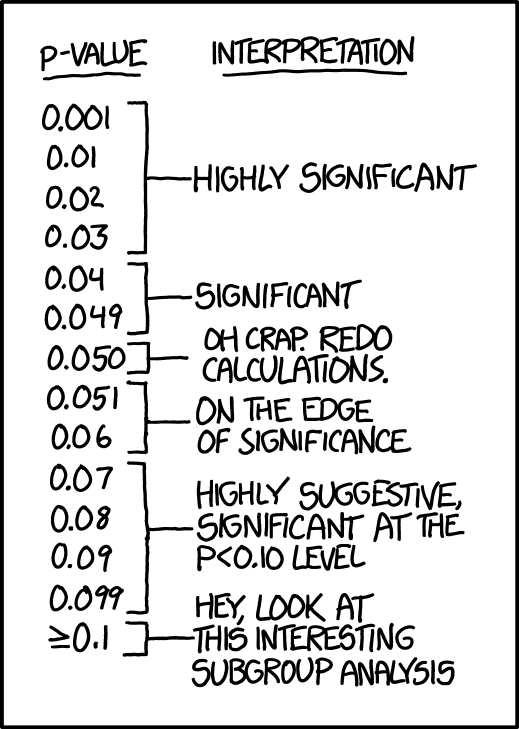
Figure 1: Annual maxima surge data from the San Francisco, CA tide gauge.

Non-Parametric Statistics for Non-Stationarity

Mann-Kendall Test: Assume data is independent and no periodic signals, but no specific distributional assumption

\[S = \sum_{i=1}^{n-1} \sum_{j={1+1}}^n \text{sgn}\left(y_j - y_i\right).\]

SF Tide Gauge Data: \(S=921\).

Parametric Statistics for Non-Stationarity

Fit a regression

\[ \begin{gather*} y_i = \beta_0 + \beta_1 t + \varepsilon_i, \\ \varepsilon_i \sim \mathcal{N}(0, \sigma^2\mathbb{I}). \end{gather*} \]

SF Tide Gauge Data: \(\hat{\beta} \approx (1.26, 4 \times 10^{-4})^T\)

Statistical Significance

Is the value of the test statistic consistent with the null hypothesis?

More formally, could the test statistic have been reasonably observed from a random sample given the null hypothesis?

Statistical Significance

Note: Statistical significance does not mean anything about whether the alternative hypothesis is “true” or an accurate reflection of the data-generating process.

More clever null hypothesis setups can get around this, but they aren’t the default.

Non-Parametric Null Hypothesis

\(\mathcal{H}_0: S = 0\) (no average trend).

The sampling distribution of \(S\) consistent with that hypothesis is \[S \sim \mathcal{N}\left(0, \frac{n(n-1)(2n+5)}{18}\right).\]

SF Tide Gauge Data: \(Var(S) = 224875\)

Parametric Null Hypothesis

\(\mathcal{H}_0: \beta_1 = 0\) (time does not explain trends).

Use the \(t\)-statistic:

\[\hat{t} = \frac{\hat{\beta_1}}{se(\hat{\beta_1)}},\] \(\hat{t} \sim t_{n-2}\).

SF Data: \(t = 2.31\).

Error Types

Null Hypothesis Is
True False
Decision About Null Hypothesis Don’t reject True negative (probability \(1-\alpha\)) Type II error (false negative, probability \(\beta\))
Reject Type I Error (false positive, probability \(\alpha\)) True positive (probability \(1-\beta\))

Type I and Type II Errors

The standard null hypothesis significance framework is based on balancing the chance of making Type I (false positive) and Type II (false negative) errors.

Idea: Set a significance level \(\alpha\) which is an “acceptable” probability of making a Type I error.

Aside: The probability \(1-\beta\) of correctly rejecting \(H_0\) is the power.

p-Values

The p-value captures the probability that, assuming the null hypothesis, you would observe results at least as extreme as you observed.

Code
test_dist = Normal(0, 3)
x = -10:0.01:10
plot(x, pdf.(test_dist, x), linewidth=3, legend=false, color=:black, xticks=false,  yticks=false, ylabel="Probability", xlabel=L"y", bottom_margin=10mm, left_margin=10mm, guidefontsize=16)
vline!([5], linestyle=:dash, color=:purple, linewidth=3, )
areaplot!(5:0.01:10, pdf.(test_dist, 5:0.01:10), color=:green, alpha=0.4)
quiver!([-4.5], [0.095], quiver=([1], [-0.02]), color=:black, linewidth=2)
annotate!([-5], [0.11], text("Null\nSampling\nDistribution", color=:black))
quiver!([6.5], [0.03], quiver=([-1], [-0.015]), color=:green, linewidth=2)
annotate!([6.85], [0.035], text("p-value", :green))
quiver!([3.5], [0.02], quiver=([1.5], [0]), color=:purple, linewidth=2)
annotate!([0.9], [0.02], text("Observation", :purple))
plot!(size=(650, 500))
Figure 2: Illustration of a p-value

p-Value and Significance

If the p-value is sufficiently small (below \(\alpha\)), we say that we can reject the null hypothesis with \(1-\alpha\) confidence, or that the finding is statistically significant at the \(1-\alpha\) level.

This can mean:

  1. The null hypothesis is not true for that data-generating process;
  2. The null hypothesis is true but the data is an outlying sample.

What p-Values Are Not

  1. Probability that the null hypothesis is true;
  2. Probability that the effect was produced by chance alone;
  3. An indication of the effect size.

Aside: p-Values

XKCD #1478

Source: XKCD

SF Tide Gauge Data

For the SF tide gauge data, the p-value for the Mann-Kendall test is 0.5.

  • What can you conclude?
  • What can’t you conclude?

SF Tide Gauge Data

The p-value for the coefficient of the time-varying term in a regression is 0.02.

What can/can’t you conclude?

What is Any Statistical Test Doing?

  1. Assume the null hypothesis \(H_0\).
  2. Compute the test statistic \(\hat{S}\) for the sample.
  3. Obtain the sampling distribution of the test statistic \(S\) under \(H_0\).
  4. Calculate \(\mathbb{P}(S > \hat{S})\) (the p-value).

Some Criticisms of Null Hypothesis Significance Testing

  • Does a dichotomy between \(H_0\) and \(H\) make sense?
  • What are the implications of (not) rejecting \(H_0\)?
  • Why was the significance level chosen?

What Might Be More Satisfying?

  • Consideration of multiple plausible (possibly more nuanced) hypotheses.
  • Assessment/quantification of evidence consistent with different hypotheses.
  • Insight into the effect size.

Model Selection as Hypothesis Testing

Model Assessment Through Simulation

If we have a model which permits simulation (through Monte Carlo or the bootstrap):

  1. Calibrate models under different assumptions;
  2. Simulate realizations from those models;
  3. Compute the distribution of the relevant statistic \(S\) from these realizations;
  4. Assess which distribution is most consistent with the observed quantity.

Advances of Simulation for “Testing”

  • More structural freedom (don’t need to write down the sampling distribution of \(S\) in closed form);
  • Don’t need to set up a dichotomous “null vs alternative” test;
  • Models can reflect more nuanced hypotheses about data generating processes.

How Do We Assess Models For Selection?

Generally, through predictive performance: how probable is some data (out-of-sample or the calibration dataset)?

But there are also metrics of how well you explain the existing data (RMSE, R2).

Key Points

Hypothesis Testing

  • Null Hypothesis Significance Testing: Compare a null hypothesis (no effect) to an alternative (effect)
  • \(p\)-value: probability (under \(H_0\)) of more extreme test statistic than observed.
  • \(p\)-values are often over-interpreted, with negative outcomes!
  • “Significant” if \(p\)-value is below a significance level reflecting acceptable Type I error rate.

Upcoming Schedule

Next Classes

Next Week: Model Evaluation/Selection Criteria

Assessments

Homework 4: Released End of Week, Due 5/3 (Last One!)

Project: Simulation Study Due Friday (4/12).